
No products in the cart.
Uncategorized
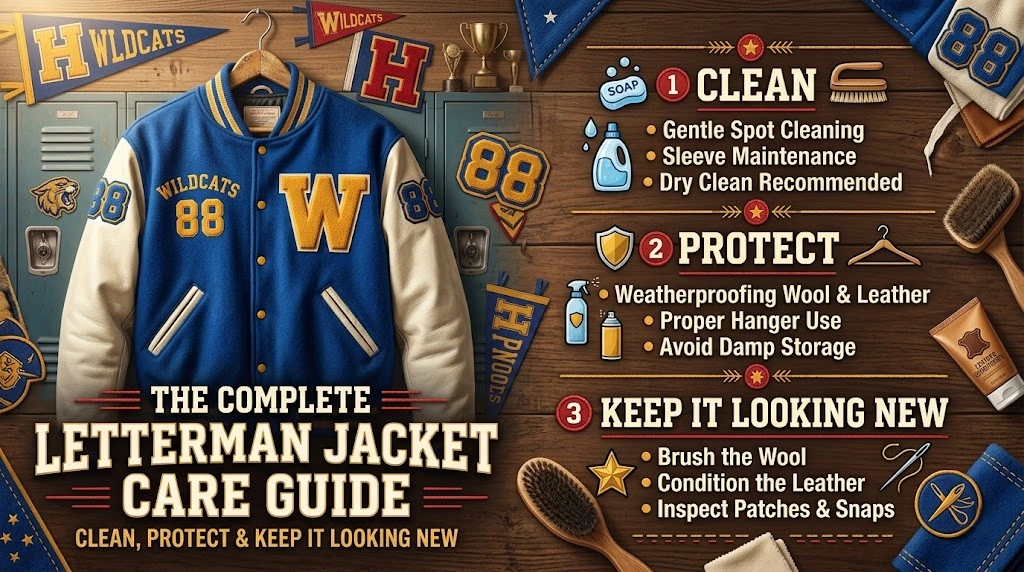
The Complete Letterman Jacket Care Guide: Clean, Protect & Keep It Looking New
29
Apr
Apr
Your letterman jacket isn’t just outerwear — it’s a statement. Whether it holds school memories or just your personal style, it deserves proper care. This guide covers everything your competitor doesn’t: material-by-material care, storage secrets, seasonal tips, product recommendations, and more.
Table of Contents
- Know Your Jacket First (Materials Matter)
- Spot Cleaning — The Right Way
- Deep Cleaning: Step-by-Step
- Caring for Wool Body — Do’s & Don’ts
- Caring for Leather Sleeves — Do’s & Don’ts
- Drying Your Jacket Without Ruining It
- Steam Cleaning for a Quick Refresh
- How to Remove Specific Stains
- Long-Term Storage Tips
- Seasonal Care Routine
- Care Myths — Busted
- Product Recommendations
- FAQs
Know Your Jacket First — Materials Matter
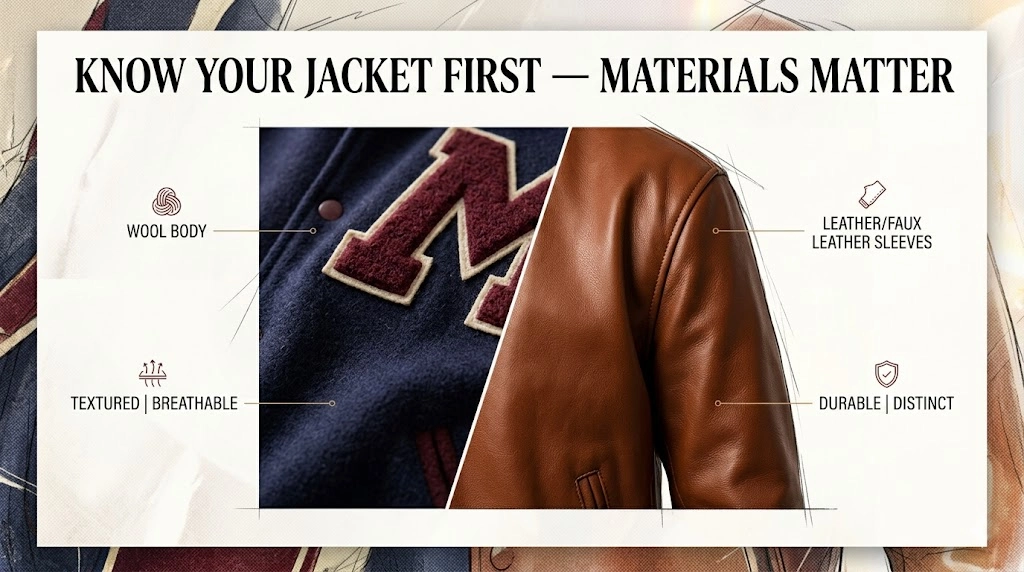
Most letterman jackets are made of two different materials: a wool body and leather or faux leather sleeves. Each requires a completely different approach. Treating them the same way is the #1 mistake people make.
Before doing anything, check the care label inside your jacket. If it says dry clean only — respect that.
Spot Cleaning — The Right Way
For small marks or surface stains, always start with spot cleaning before attempting a full wash.
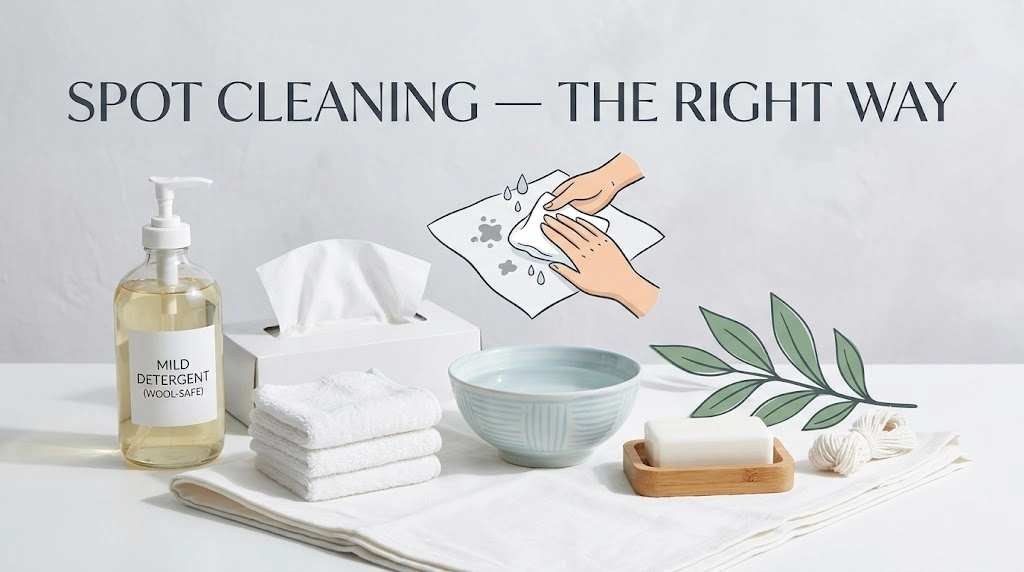
What you need:
- Mild detergent (wool-safe or baby shampoo)
- Soft white cloth (avoid colored cloths — dye transfer is real)
- Cold water
- Dry paper towel
Steps:
- Blot the stain with a dry paper towel — never rub, always blot
- Mix a few drops of mild detergent with cold water
- Dip a soft cloth, wring it out well
- Gently dab in circular motions from the outside of the stain inward
- Rinse with a clean damp cloth
- Air dry immediately — don’t let moisture sit
Deep Cleaning: Full Step-by-Step
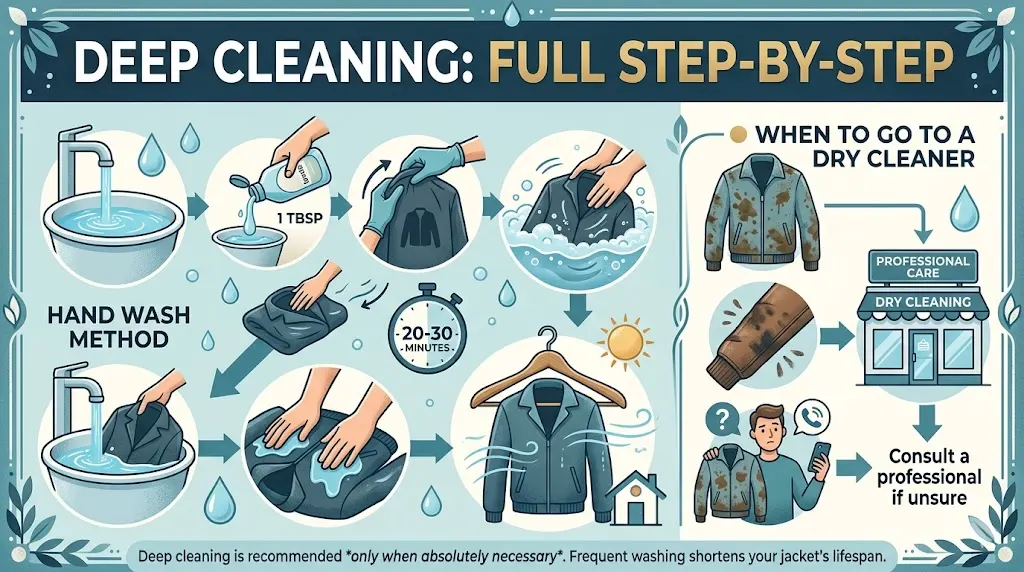
Only deep clean when absolutely necessary. Frequent washing shortens your jacket’s life.
Hand Wash Method (Safest):
- Fill a clean basin with cold water
- Add 1 tbsp of gentle, pH-neutral detergent
- Turn your jacket inside out
- Submerge and gently swish — no scrubbing, no twisting
- Let it soak for 20–30 minutes max
- Drain and rinse thoroughly with cold water
- Press gently to remove water — never wring or twist
- Hang on a wide-shoulder hanger to air dry
When to Go to a Dry Cleaner:
- Jacket is heavily soiled
- Leather sleeves have deep stains
- You’re not confident doing it at home
Always tell the dry cleaner it’s a wool-leather combination garment.
Caring for the Wool Body
Wool is durable but sensitive to heat, agitation, and harsh chemicals.
Do:
- Use wool-safe or lanolin detergent
- Wash in cold water only
- Brush with a soft clothes brush after every few wears to remove surface dust and lint
- Store with cedar balls to repel moths
Don’t:
- Machine wash (ever)
- Use hot water — it shrinks wool permanently
- Tumble dry
- Iron directly on wool — use a pressing cloth

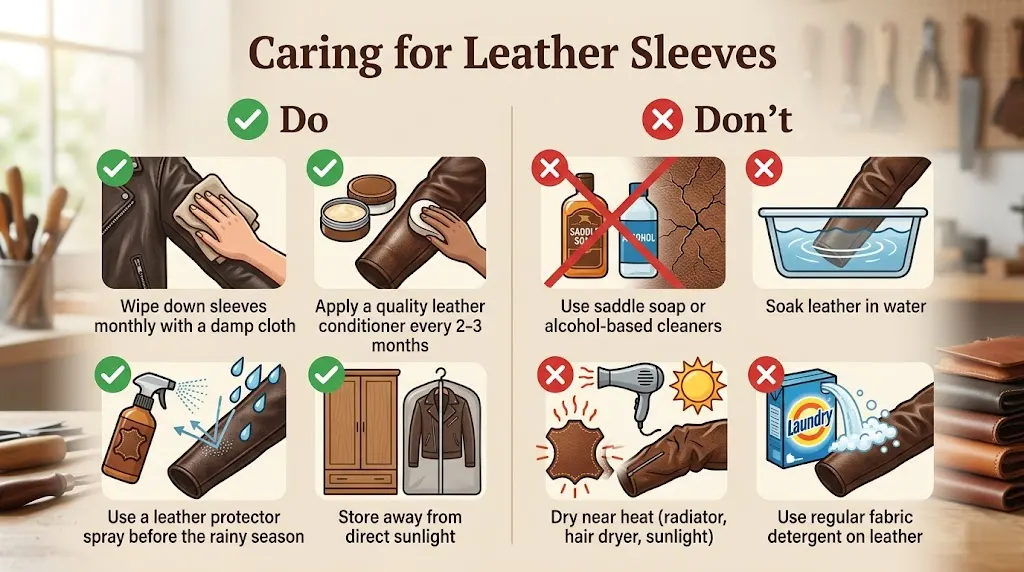
Caring for Leather Sleeves
Leather needs moisture to stay soft and crack-free. Neglect it, and it dries out, stiffens, and eventually cracks.
Do:
- Wipe down sleeves monthly with a damp cloth
- Apply a quality leather conditioner every 2–3 months
- Use a leather protector spray before the rainy season
- Store away from direct sunlight
Don’t:
- Use saddle soap or alcohol-based cleaners
- Soak leather in water
- Dry near heat (radiator, hair dryer, sunlight)
- Use regular fabric detergent on leather
Best conditioners to use: Leather Honey, Bickmore Bick 4, or any water-based leather conditioner.
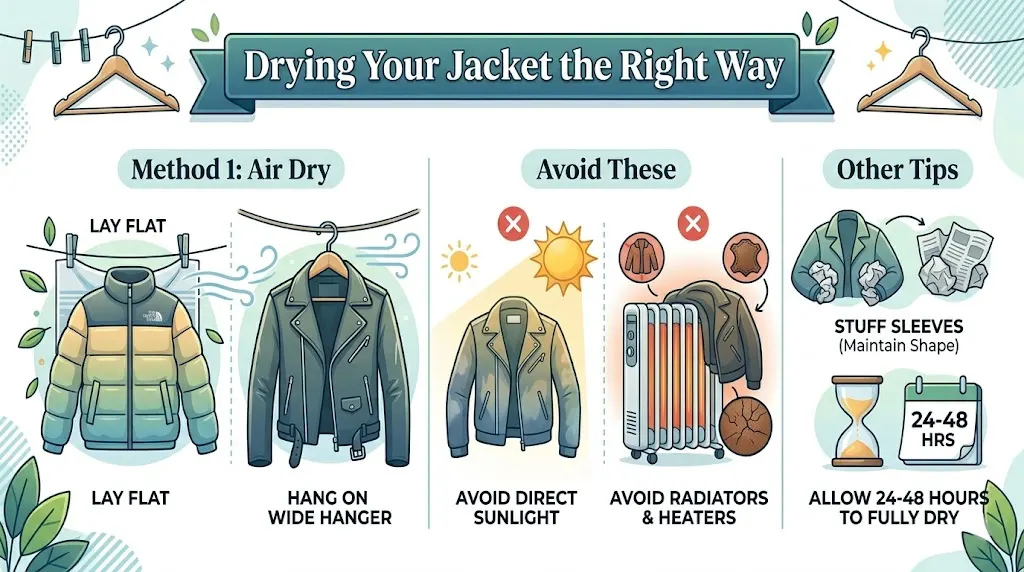
Drying Your Jacket the Right Way
Drying is where most people ruin their jackets.
- Always air dry — lay flat or hang on a wide hanger
- Keep away from direct sunlight (fades colors and dries out leather)
- Keep away from radiators and heaters (shrinks wool, cracks leather)
- Allow at least 24–48 hours to fully dry before wearing or storing
- Stuff sleeves lightly with tissue paper while drying to maintain shape
Steam Cleaning for a Quick Refresh
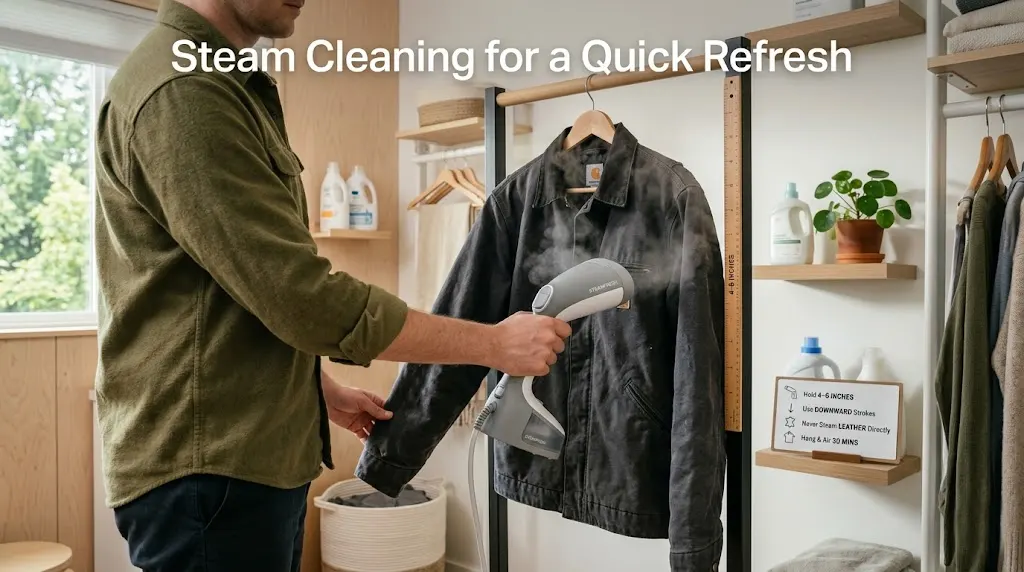
Steam cleaning is your best friend between washes. It removes light odors, kills surface bacteria, and relaxes wrinkles without any moisture damage.
- Hold steamer 4–6 inches away from the fabric
- Use slow, downward strokes
- Never steam leather directly — keep distance or use a pressing cloth
- Let the jacket hang and air out for 30 minutes after steaming
How to Remove Specific Stains
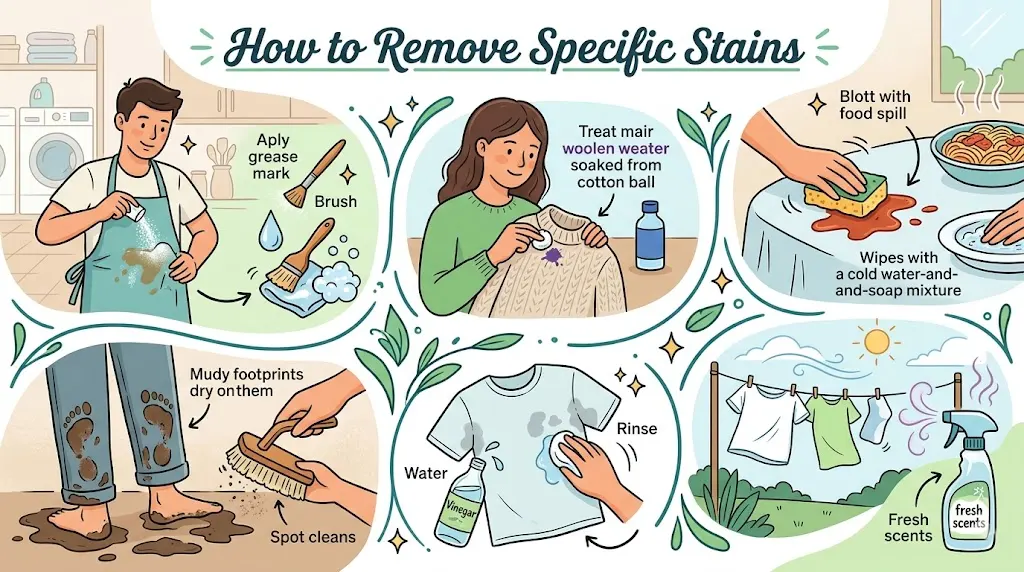
| Stain Type | Method |
|---|---|
| Grease / Oil | Apply cornstarch, let sit 15 mins, brush off, then dab with mild detergent |
| Ink | Dab with rubbing alcohol on a cotton ball (wool only, not leather) |
| Food / Sauce | Blot immediately, then spot clean with cold water + detergent |
| Mud | Let dry completely, brush off, then spot clean |
| Sweat stains | Mix white vinegar + cold water, dab gently, rinse |
| Odor | Hang in fresh air overnight or use a fabric deodorizer spray |
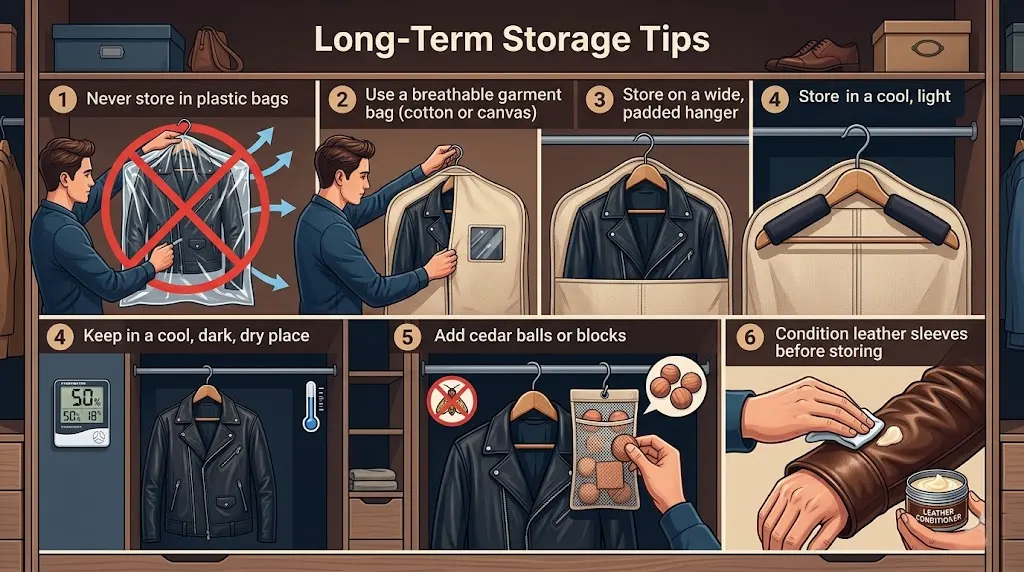
Long-Term Storage Tips
Storing your jacket properly is just as important as cleaning it.
- Never store in plastic bags — leather needs to breathe
- Use a breathable garment bag (cotton or canvas)
- Store on a wide, padded hanger to maintain shoulder shape
- Keep in a cool, dark, dry place — humidity is the enemy
- Add cedar balls or blocks to repel moths and absorb moisture
- Condition leather sleeves before storing for the season
Seasonal Care Routine
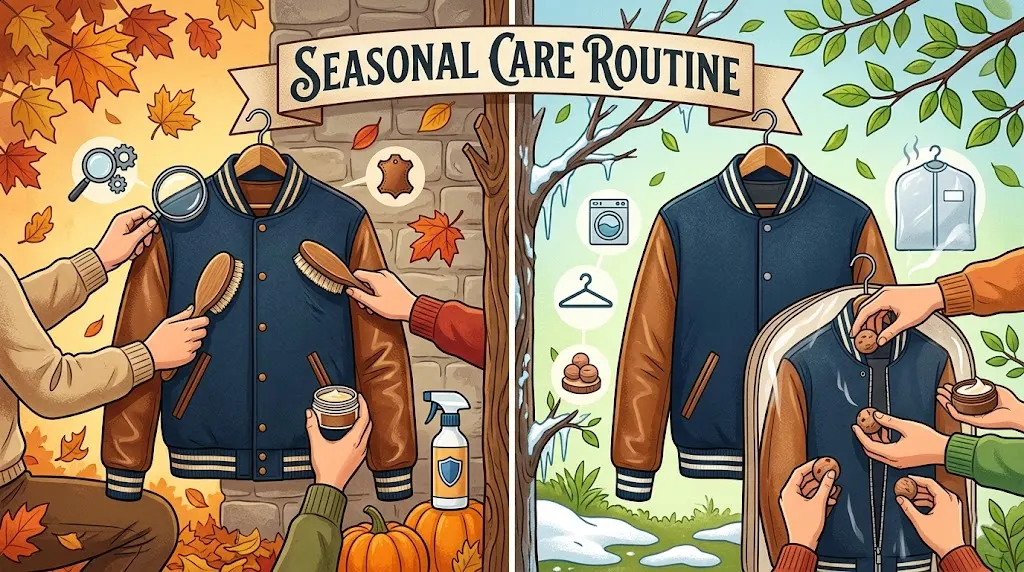
Before Winter (Start of Season):
- Inspect for any damage or wear
- Condition leather sleeves
- Brush wool body
- Apply leather protector spray
After Winter (End of Season):
- Deep clean or take to dry cleaner
- Let fully dry before storing
- Condition leather again
- Store properly with cedar balls
Care Myths — Busted
Myth: Machine washing is fine on a gentle cycle. False. Even a gentle cycle agitates and stretches wool fibers and can crack leather sleeves. Hand wash or dry clean only.
Myth: You can iron out wrinkles directly. No. Direct iron heat scorches wool and destroys leather. Use steam only, or a pressing cloth on low heat.
Myth: Leather doesn’t need maintenance if it looks fine. Wrong. Leather dries out from the inside. By the time it looks cracked, it’s already too late. Condition regularly.
Myth: Sunlight drying is natural and safe. No. UV rays fade colors and dry out leather rapidly. Always dry in a shaded, ventilated space.
Myth: More detergent = cleaner jacket. False. Excess detergent is harder to rinse out and leaves residue that attracts more dirt.

Recommended Products
- Wool Wash: Woolite Delicates, The Laundress Wool & Cashmere Shampoo
- Leather Conditioner: Leather Honey, Bickmore Bick 4
- Leather Protector: Apple Brand Garde Rain & Stain Repellent
- Fabric Brush: Mason Pearson Clothes Brush
- Garment Bag: Whitmor Cotton Garment Bag
- Cedar Balls: Household Essentials Cedar Balls

13. FAQs
How often should I clean my letterman jacket? Spot clean as needed. Deep clean only once or twice a season, or when visibly soiled.
Can I use a washing machine? No. Machine washing damages wool fibers and can crack or warp leather sleeves. Always hand wash or dry clean.
How do I get rid of smell without washing? Hang in fresh air overnight. Use a fabric deodorizer spray or steam clean lightly.
How do I know if my leather needs conditioning? Do a simple test: put a small drop of water on the leather. If it absorbs quickly instead of beading up, the leather needs conditioning.
Can I use the same detergent on both wool and leather? No. Use a wool-safe detergent for the body and a leather-specific cleaner for the sleeves.
What if my jacket shrinks? Gently stretch it back into shape while still damp. Lay flat to dry. Avoid heat in future.
How do I remove creases from wool? Use a steamer or place a damp cloth over the area and press lightly with a cool iron.